A 120-seat robotics lab, handed over in six weeks
A teaching lab is not a deployment. The hardware has to survive being used wrongly, by people who are learning, without a technician in the room — and it has to do that for a full academic year.
The problem
Three campuses wanted the same course. That meant the same hardware at every site, or the same course would produce three different results and the assessment would not transfer.
The bigger constraint was maintenance. A college does not have a robotics engineer on staff, and a broken unit in week three of a twelve-week module is not an inconvenience, it is a lost term for thirty students.
What we shipped
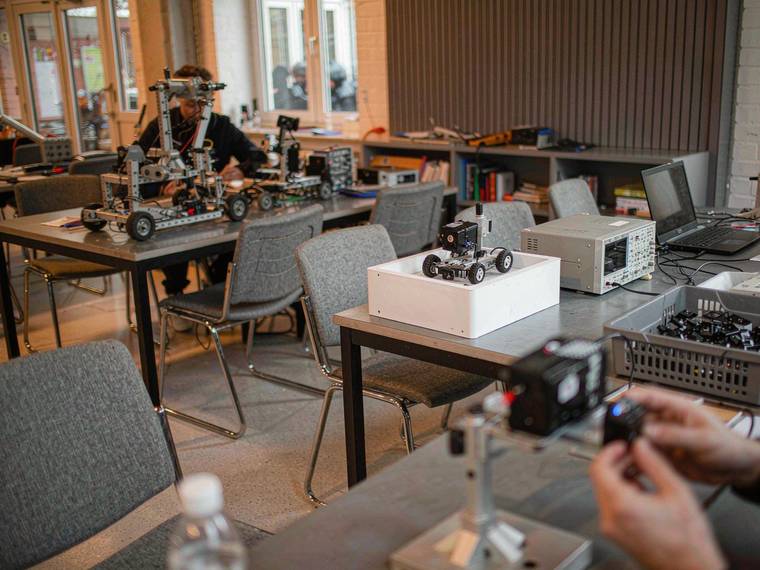
Forty units across three campuses, one curriculum, and a consumables and spares kit sized to the failure modes students actually produce.
- Identical — the same model, firmware and toolchain at every campus, so a lab sheet written at one site runs unchanged at the other two.
- Field-repairable — every part a student can break is a part a lecturer can swap with a screwdriver, in under ten minutes, without a calibration rig.
- Spares — six grippers, four drivetrains, two controllers per campus. The list came from what broke during the pilot term, not from a datasheet.
- Commissioning — six weeks from delivery to first class, including lecturer training.
The 120 seats were filled in the first enrolment round, with a waiting list for the following term.
The result
A full academic year, 120 students, and 94% lab availability — the missing 6% being scheduled maintenance, not failures.
The measure the head of faculty cares about is different: no module was cancelled for lack of working equipment. That had never been true of the previous lab.
Working on something like this? Talk to an engineer