
Fourteen substations inspected, no outage booked
Substation inspection normally means one of two things: a planned outage, or a person standing closer to live switchgear than anyone would like. Fourteen sites were surveyed in six weeks without either.
The problem
The asset register said the switchgear was in good condition. The register was four years old, and the only way to update it was to send an engineer inside the exclusion zone with a clipboard, or to take the bay out of service and put a crew in it.
Neither was acceptable on a schedule. Outages have to be booked months ahead and cost the operator both the switching and the goodwill; the manual survey was six sites a quarter at best, in daylight, in dry weather.
What we shipped
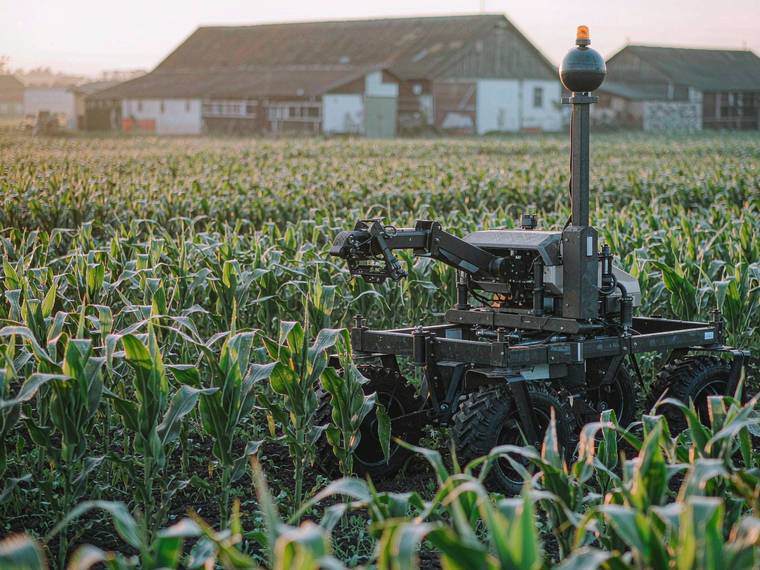
A LiDAR and thermal payload flown on a tethered platform outside the exclusion boundary, georeferencing every component it can see through the mesh.
- Stand-off — the aircraft never enters the exclusion zone. It maps the bay from outside the fence, at a distance the safety case already allowed.
- Thermal — a hot joint reads the same from 8 metres as from 1, which is the whole point: the failure mode we were looking for is heat, not detail.
- Repeatability — the same flight path every visit, so two surveys six months apart can be differenced instead of described.
- Output — a point cloud and a per-asset condition line, not a folder of photographs for someone to interpret later.
Fourteen sites were surveyed inside six weeks, between scheduled maintenance windows, with no switching and no outage booked.
The result
Two joints were found running hotter than the register believed. Both were replaced at the next planned window rather than at a failure — which is the entire economic argument for inspecting more often than you can afford to shut down.
The survey now runs on a six-month cycle instead of an annual one, at a fraction of the cost of the manual visit it replaced.
Working on something like this? Talk to an engineer