Small-batch yield up 23% on a line built for long runs
The cell was tooled for a product that ran for eleven hours at a time. It was now being asked to run four different products in a day, and the changeover was eating the margin.
The problem
Every changeover meant a fixture swap, a manual re-teach and a first-article inspection that took longer than the run itself. On a long run that overhead disappears into the noise. On a four-hour batch it is the difference between profit and loss.
Replacing the line was not on the table — it was eight years old, paid for, and mechanically sound. The problem was not the machine, it was that the machine had no idea which product was in it.
What we shipped
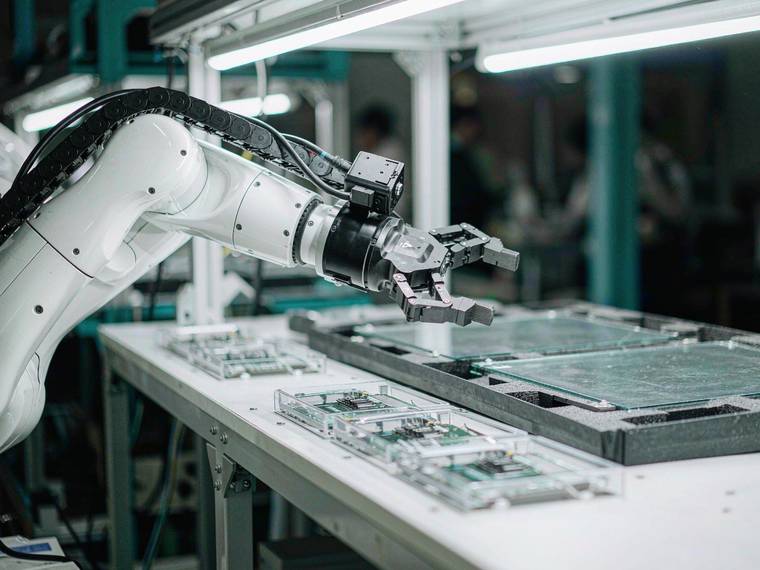
A six-axis arm with a quick-change gripper and a vision package that reads the part, not the program.
- Recognition — the cell identifies the part from its geometry and loads the matching recipe, so a changeover is a fixture swap and two button presses.
- Re-teach — eliminated. The vision system locates the part in the fixture and corrects the offset; nobody touches a pendant.
- First article — measured in-cell against the drawing, so the inspection happens while the operator is still standing there.
- Install — three weekends, because the line ran on weekdays and could not stop.
The original PLC stayed. The arm is a station inside the existing cell, not a replacement for it.
The result
First-pass yield is up 23% across the four small-batch products, most of it from the first-article step: defects that used to be found after twenty parts are now found after one.
Changeover dropped from 95 minutes to 22. The line now runs six batches a day where it used to run three.
Working on something like this? Talk to an engineer